
作者: hobilian@gmail.com

How OpenAI’s Jobs Platform and Academy are Redefining the Future of Work

OpenAI’s push for AI-focused education and job platforms could change the way we think about work and learning. The opportunities are huge, but so are the challenges. To make the most of this shift, three things are key:

Smart AI Policies: Governments must create safety nets for workers and guidelines for fair AI use.

Ongoing Education: Individuals and businesses alike need to keep learning and adapting.

Collaboration Across Sectors: Tech companies, schools, and employers should work together to spread AI skills widely.

As AI continues to shape our world, everyone—from leaders to everyday workers—has a role to play. By combining innovation with responsibility, we can build a future where AI drives progress without leaving people behind.

Read More

Artificial Intelligence and Automation: Mo Gawdat’s Stark Warning for High-Skill Jobs

Artificial Intelligence (AI) advancements have become a focal point of both optimism and concern in modern discourse. While the potential for AI to revolutionize industries and enhance everyday life is lauded, there is a growing apprehension about its disruptive capacity. Former Google executive Mo Gawdat has emerged as a prominent voice in this discourse, cautioning that AI could eliminate high-skill jobs traditionally secured by CEOs and politicians, potentially wiping out the middle class by 2027.

Read More

Opal by Google: The Future of App Development Is No-Code and It’s Now

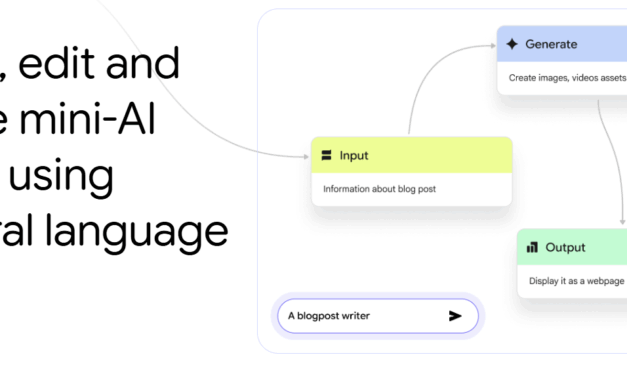
Artificial intelligence is no longer confined to research labs or enterprise data centers. Over the past decade, the technology has quietly threaded itself into chat bots, recommendation engines and image‑generation tools. But 2025 is shaping up to be the year when AI takes an even more accessible turn. Google Labs recently unveiled Opal, an experimental platform that allows users to build “AI mini‑apps” by simply describing what they want. This concept—app development through natural language and easy visual editing—aims to democratise software creation for non‑programmers. Opal is currently available in the United States and was launched in a public beta on 24 July 2025infoworld.com. It chains together AI models, prompts and tools to create multi‑step workflows that can be shared instantlyinfoworld.com.

Read More

OpenAI’s Deep Search Breakthrough: Are There Other AI Alternatives That Can Do the Same?

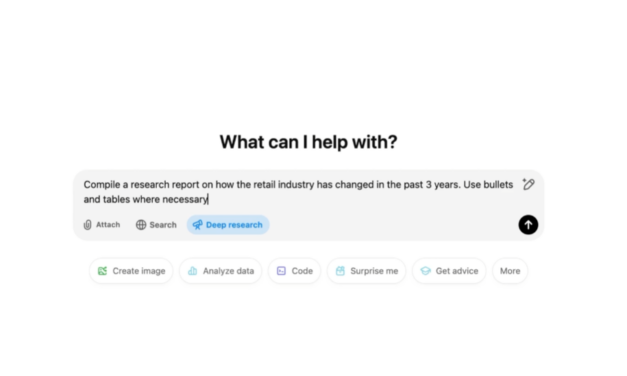
The advent of OpenAI’s Deep Search has generated considerable excitement, marking a potential paradigm shift in how we approach information gathering and analysis online 1. This novel feature, integrated into ChatGPT, has been lauded for its ability to perform in-depth, multi-step research on the internet, promising to condense hours of human effort into mere minutes 3. The initial buzz surrounding Deep Search highlights its promise of acting as a sophisticated research analyst at users’ fingertips 3. Built upon an early iteration of OpenAI’s o3 model, specifically optimized for web browsing and data analysis, its core appeal lies in its capacity to autonomously locate, interpret, and synthesize information from a vast array of online sources, culminating in comprehensive reports complete with citations 2. This capability signifies a notable evolution from traditional search methods, suggesting a future where AI plays a more active and autonomous role in complex intellectual tasks.

Read More