

作者: hobilian@gmail.com

Will Artificial Intelligence End Humanity in the Next 30 Years?

The question of whether artificial intelligence (AI) could eventually lead to the extinction of humanity is no longer confined to science fiction. Geoffrey Hinton, the “Godfather of AI,” has issued a chilling warning: there is a 10% to 20% chance that AI could wipe out humanity within the next 30 years. While some experts echo his concerns, others argue that these fears are exaggerated or that more immediate risks deserve our attention. This article explores five perspectives on the topic: the existential threat posed by AI, skepticism about its ability to cause extinction, the necessity of focusing on near-term challenges, the importance of AI as a collaborative partner, and the ethical dilemmas posed by unchecked AI development. By analyzing these viewpoints, we gain a deeper understanding of AI’s potential impact on our future.

Read More

Has o3 Achieved True “General Intelligence”?

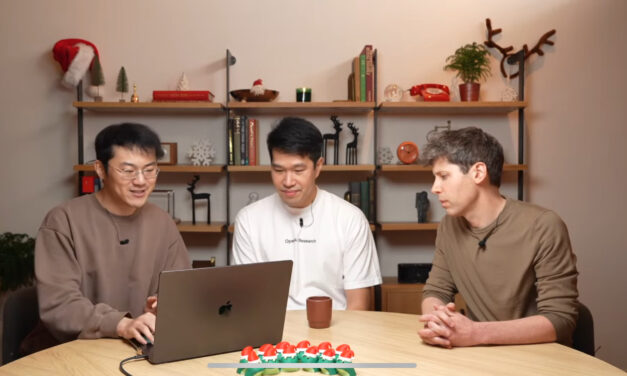
The field of artificial intelligence (AI) has recently witnessed groundbreaking advancements with the development of OpenAI’s o3 model, which demonstrated human-level performance in the ARC-AGI benchmark. Designed to evaluate the adaptability and reasoning capabilities of AI systems, the ARC-AGI test provides critical insights into progress toward Artificial General Intelligence (AGI). OpenAI’s o3 represents a significant step forward, showcasing impressive results in various domains. However, while the milestone is noteworthy, it also raises questions about the future of AGI and its broader implications.

Read More

OpenAI’s o3 Model Surpasses o1 with Triple the Performance in Advanced Reasoning Tasks

OpenAI’s O3 isn’t just a better version of O1—it’s a total game-changer. Taking what O1 did and multiplying it, O3 pushes AI capabilities to a whole new level. With an impressive 87.5% score on the ARC-AGI test—blowing O1 out of the water—O3 delivers next-level reasoning, precision, and problem-solving. It handles tough programming challenges, introduces smarter ethical features, and sets a high bar for responsible AI usage. Sure, it demands more computational power, but OpenAI is already working on O3-mini, a lighter version to make this powerhouse more accessible.

Read More

How To Use ChatGPT on WhatsApp?

ChatGPT on WhatsApp combines the simplicity of messaging with the intelligence of AI, creating an experience that’s both intuitive and powerful. Why is this important? First and foremost, it brings AI to a platform that billions of people use daily. There’s no need to download extra apps or learn new interfaces—just open WhatsApp and start chatting.

Read More

What Happens When We Trust AI More Than Each Other

As artificial intelligence continues to refine its ability to provide information, support, and companionship, humanity faces a profound transformation. What happens when we trust algorithms more than people? This article explores a future where AI becomes the cornerstone of trust, examining its societal, emotional, and ethical implications. A world guided by data may bring efficiency and precision, but it also risks eroding the very fabric of human relationships. As trust in AI grows, we must ask ourselves: What does it mean to be human in a world governed by machines?

Read More